
A stain on the ceiling next to the chimney, or damp on the chimney breast inside, is one of the most common leaks we see. The tricky part is that water can get in at several points, and the fix depends on which one it is.
The flashing
Flashing is the metal that seals the joint between the chimney and the roof. It is the most common source of chimney leaks. Over time the sealant dries out, the metal lifts or rusts, or the counter-flashing set into the mortar works loose. Leaks from flashing usually show up during heavy rain and appear right where the chimney meets the ceiling or the attic.
The crown
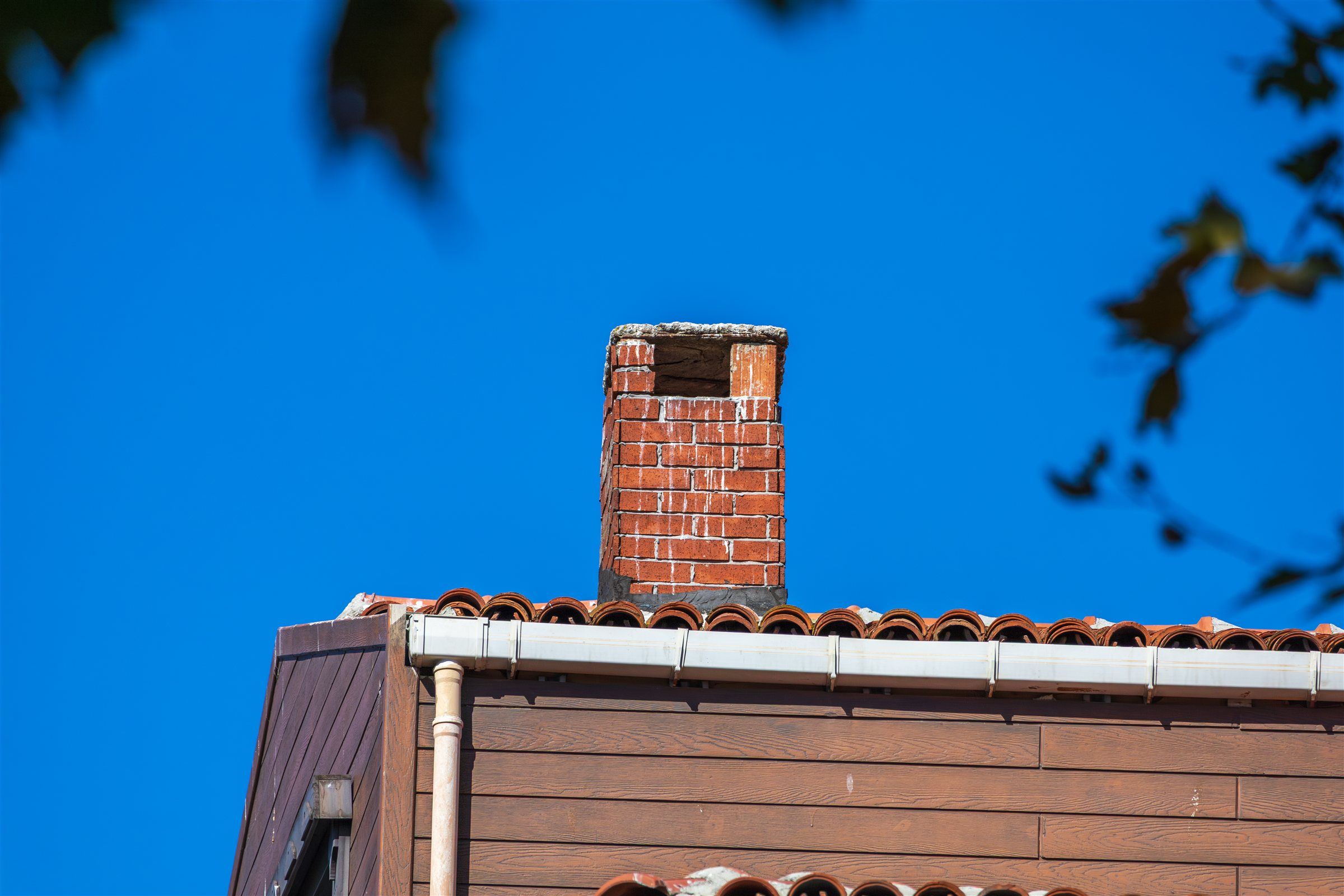
The crown is the concrete or mortar cap that covers the top of the chimney around the flue. When it cracks, water runs straight down into the brickwork and the inside of the chimney. Small hairline cracks can often be sealed; a crown that is badly cracked or crumbling needs to be rebuilt. A missing or damaged chimney cap adds to the problem by letting rain straight into the flue.
The brickwork
Brick and mortar are porous. When mortar joints erode or bricks start to flake, water soaks into the chimney and moves inwards. You may see white, chalky staining on the outside, crumbling joints or pieces of brick on the roof. This kind of leak tends to show up as damp patches that spread slowly, rather than drips.
- Leaks during heavy rain at the roof line often point to the flashing
- Water inside the flue or the firebox often points to the crown or cap
- Slow, spreading damp and crumbling joints point to the brickwork
Can’t tell which one it is?
We look at the flashing, crown and brickwork together and explain what we find before recommending any work.
Why the right diagnosis matters
Resealing the flashing won’t stop a leak through a cracked crown, and repointing the brickwork won’t fix lifted flashing. It is common to find more than one problem on an older chimney, so a careful look at the whole chimney saves paying for a repair that doesn’t solve the leak.
What the repair involves
Flashing repairs usually mean new step and counter-flashing, cut neatly into the mortar. Crowns can be sealed or rebuilt. Worn mortar joints are repointed, and damaged bricks are replaced. After the work, a breathable water repellent can help the brickwork shed rain while still letting moisture out.