
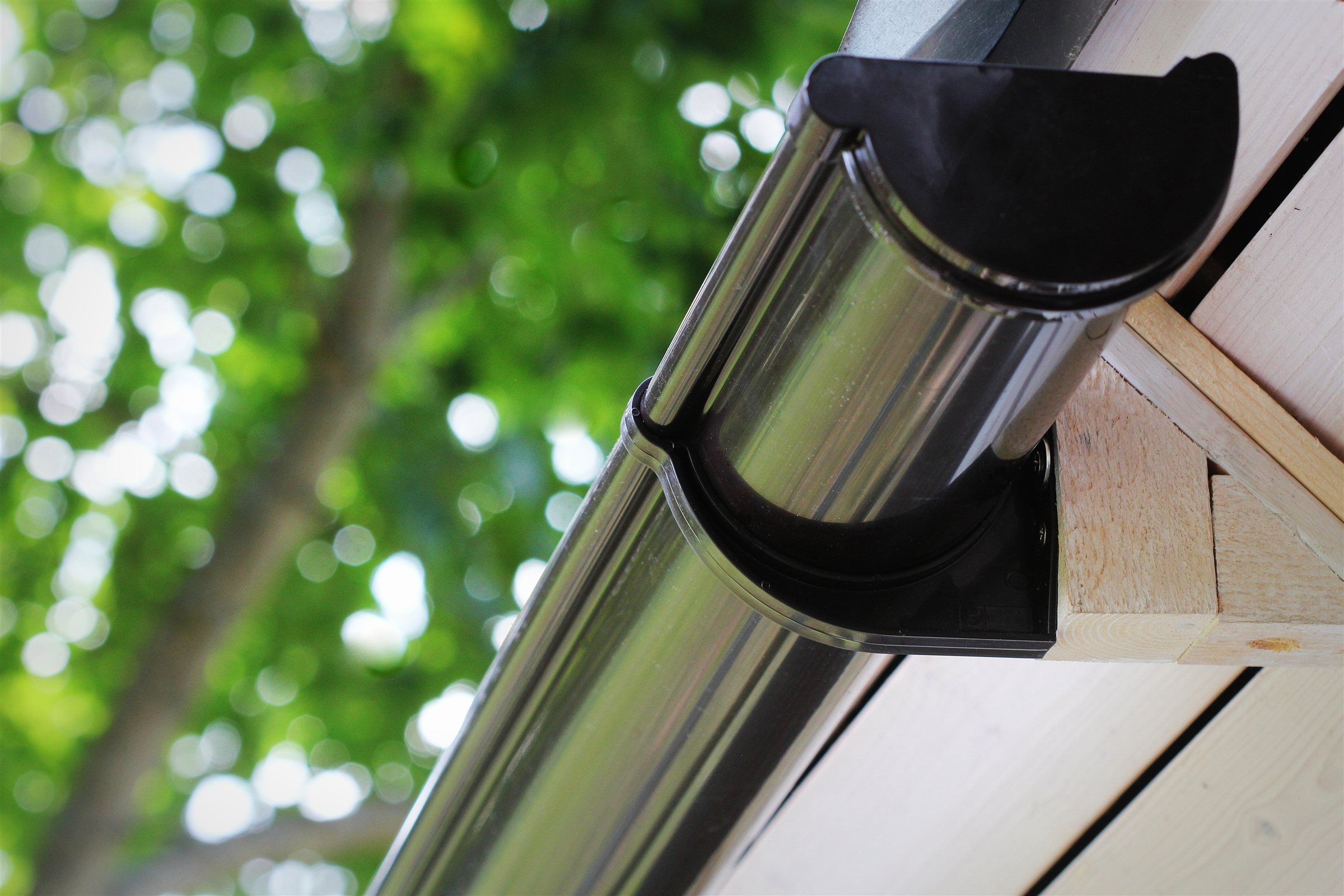
Gutters do one job: collect the water that runs off your roof and carry it away from the house. If they are too small for your roof, they overflow in heavy rain, and that water ends up against your siding and foundation. Choosing the right size comes down to a few simple questions.
How much roof drains into each gutter
Every section of gutter collects the water from the part of the roof above it. A long, wide roof plane sends far more water into its gutter than a small porch roof does. That’s why one house can need different gutter sizes on different sides.
How steep the roof is
Water runs off a steep roof faster than a low-slope one, and it arrives at the gutter with more force. Steeper roofs often need larger gutters, or more downspouts, to keep water from shooting over the front edge in a downpour.
Where the downspouts go
A gutter is only as good as its downspouts. Long runs with a single downspout fill up quickly, while extra or larger downspouts let the same gutter carry more water. Where the downspouts end matters too: they should send water well away from the foundation, not into a flower bed against the wall.
- Larger roof areas need gutters that hold more water
- Steeper roofs move water faster and may need more capacity
- More or larger downspouts help a gutter drain quickly
Want a straight answer for your home?
We measure the roof areas, check the pitch and suggest the gutter and downspout layout that suits your house.
Signs your gutters are too small
You don’t need to measure anything to spot gutters that can’t keep up. In a heavy rain, look for water spilling over the front edge, streaks or staining on the siding below, worn soil or splash marks along the foundation and damp in the basement after storms. Gutters that overflow even when they are clean are usually undersized or short of downspouts.
Size is only part of the picture
Gutters also need the right slope towards the downspouts, solid hangers that stop them sagging and a clean run without debris. Gutter guards can help keep leaves out on homes surrounded by trees. When we replace gutters, we look at all of these together, so the new system works in the storms that matter.